St Laurence Church
Junior School
Wellbeing
Mental Health and Wellbeing
We all have mental health. Mental health affects how we feel, think and act. It refers to emotional, psychological and social wellbeing. Mental health can change on a daily basis and over time, and can be affected by a range of factors.
Mental health is important for the well-being of children. When children have good levels of wellbeing it helps them to:
- learn and explore the world
- feel, express and manage positive and negative emotions
- form and maintain good relationships with others
- cope with, and manage, change, setbacks and uncertainty
- develop and thrive.
When children and young people look after their mental health and develop their coping skills it can help them to boost their resilience, self-esteem and confidence. It can also help them learn to manage their emotions, feel calm, and engage positively with their education.
At St Laurence Church Junior School, mental health awareness is integrated in the curriculum, as well as being taught discretely in PSHE lessons. Throughout the year, we place emphasis on the Zones of Regulation, which encourages children to recognise and name feelings and learn strategies and tools for managing both positive and negative emotions and actions.
Through our PSHE, RE and PE lessons and through special events and projects such as: Mental Health Awareness Week, Antibullying Week, e-Safety Week and our Lenten project, we encourage children to develop their social and emotional skills. These skills help our children to:
- identify and manage their feelings and their behaviour, and reach out for help where necessary
- build and manage healthy relationships
- have self-control
- resolve conflict
- be self-aware
- handle and overcome difficulties
- make good decisions
- build resilience, self-esteem and confidence
- think positively about themselves and how they perceive the world around them
- recognise and prevent poor mental health
- grow into well-rounded and healthy adults.
During their time here at St Laurence Church Junior School, through the taught curriculum, as well as the wider curriculum and opportunities that are available to our children, we aim to:
- promote self-esteem and ensure children know that they are valued individuals
- encourage children to be confident
- help children to develop emotional resilience and to manage setbacks
- help children to understand their emotions and feelings better
- help children feel comfortable sharing any concerns or worries
- promote the importance of being kind and working together
- help children socially to form and maintain relationships and focus on teamwork to build community links.
There are many resources available to support parents when thinking about their child's mental health. Here are some resources that might be useful.
Trauma Informed and Attachment Aware (TIAAS)
PAUSE BIRMINGHAM
Supporting Behaviour
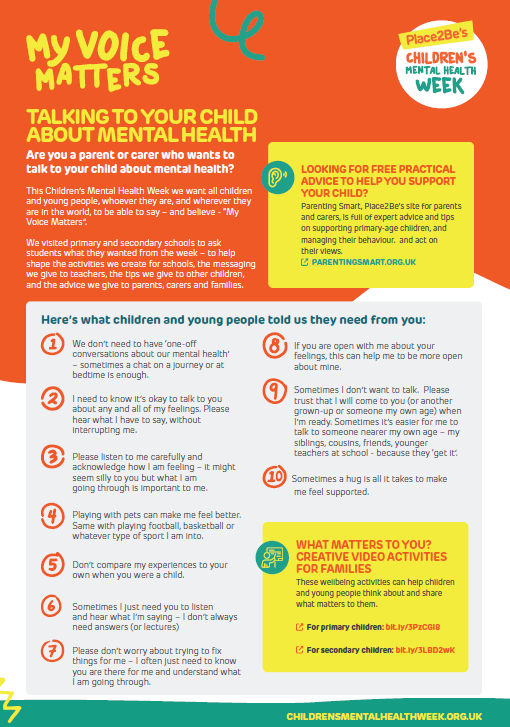
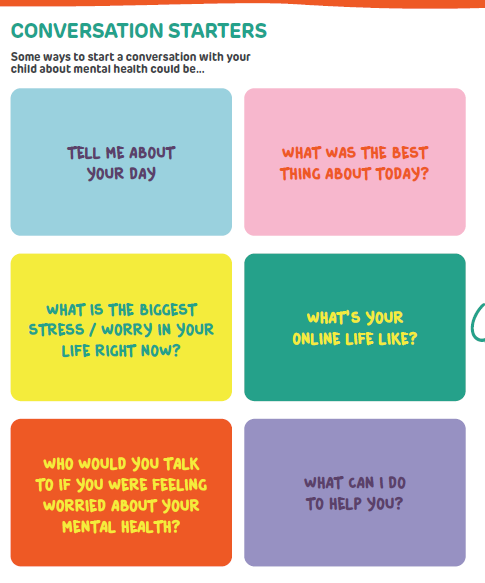
Parent Leaflet - Talking Mental Health
School Nurse drop-in clinic for parents
Anti Bullying Week Resources
NHS urgent mental health helplines
New 24/7 all ages NHS urgent mental health helplines have been rolled out across the country in 2020. They provide expert advice and assessment for children and adults facing a mental health crisis. People can call for themselves, or on behalf of someone else. We encourage the promotion of these helplines, and have developed public facing lines:
If you need help for a mental health crisis, find your local 24/7 urgent mental health helpline at nhs.uk/urgentmentalhealth.
You can call for:
- 24-hour advice and support – for you, your child, your parent or someone you care for;
- help to speak to a mental health professional;
- an assessment to help decide on the best course of treatment
If your child needs urgent mental health support or advice, you can contact your local mental health helpline via nhs.uk/urgentmentalhealth. You can call the helpline for 24-hour advice and support for you and your child, to speak to a mental health professional or for an assessment to help decide on the best course of care.
- Children's Mental Health Support which has useful links including Young Minds
-
Self-refer for physical or psychological symptoms, you can call the GP, your usual practitioner, or NHS 111 as appropriate. You can also self refer to local Psychological Therapy services that can help with common mental health problems like stress, anxiety and depression.
Bereavement support
Sadly, many families may experience the loss of a loved one. The following resources are aimed at supporting children to understand and manage loss.
Maintaining physical wellbeing
It is important to make sure that children are maintaining physical fitness. Here are links to support:
Eating Disorders and Concerns
-
BEAT Eating Disorders Support Services and Information
There are helplines and other resources available on the BEAT website, including a GP guide and a guide for Friends and Family which you can find below.
Other Links to support Mental Health and Wellbeing